Content Index
- Poor Educational Design
- Excessive Monetization and Pay-to-Win
- Lives and Penalties System
- Technical Issues and Usability
- Scoring and Competition System
- Intrusive and Manipulative Advertising
- The Savage Capitalism of Duolingo, Less Free Every Day
- 1. The Heart System: An Obstacle to the Learning Curve
- 2. The Commercialization of Premium Features
- Google Translate as a language tutor: The free alternative to Duolingo?
- How the Google Translate tutor option works
- Advantages of practicing languages with Google Translate
- Accessibility and genuine gratuity
- No ads or gamification systems
- Current limitations of the Google Translate tutor
- Prior knowledge required
- Features still in beta phase
- Google Translate vs Duolingo: compared experience
- Advertising and business model
- Motivation and usability
- Is it worth using Google Translate to learn a language?
- Frequently Asked Questions about Google Translate as a Language Tutor
- Google Translate as a language tutor: The free alternative to Duolingo?
- How the Google Translate tutor option works
- Advantages of practicing languages with Google Translate
- Accessibility and genuine gratuity
- No ads or gamification systems
- Current limitations of the Google Translate tutor
- Prior knowledge required
- Features still in beta phase
- Google Translate vs Duolingo: compared experience
- Advertising and business model
- Motivation and usability
- Is it worth using Google Translate to learn a language?
- Frequently Asked Questions about Google Translate as a Language Tutor
- Conclusion
I am a software developer, as you can see on this blog, and I have used the app for years. I think Duolingo has done many things well and others not so well, so I bring you my analysis from a functional standpoint, excesses, and aspects that I believe can be improved.
Poor Educational Design
- The app is designed to make you lose hearts at the slightest opportunity.
- Simple mistakes like a misspelled letter shouldn't completely deprive you of a heart.
- Lives are not a real educational mechanism. In the paid version, you have unlimited lives, which shows that its purpose is not educational but commercial.
- In the lessons, sometimes if you make a mistake, you're given other lessons instead of the ones you missed. It's very narrow-minded about errors, especially on Android.
- You are not earning a certificate; pronunciation mostly cancels itself.
- It does not remember the last typed or defined items.
- It does not have drag and drop in texts (on Android).
- We make mistakes if we type in Spanish or other Android keyboards.
Excessive Monetization and Pay-to-Win
- Local currency: the diamonds. They charge for everything.
- They force you to be in a competition whose prize is 130 crystals.
- They want you to pay 2,000 crystals to stay in the competition.
- Typical game where those who pay have more options.
- In the lessons, there are classes that are only for paying users.
- Misleading advertising: it says it can be used for free, but it's actually paid.
- Everything should be postponable: Duolingo Plus, the experience multipliers. It's harassment to force you to spend 30 continuous minutes in the app.
- They impose Super Duolingo on you: every benefit should be optional, not imposed.
- It is not free. The product is you, or they want you to be the product, so you'll see more ads or keep paying.
- Paid app with a free mode. You can't say it's free if it's focused on paying users.
- Gmail is a free app; you can use its main features without feeling pressured like in Duolingo.
Lives and Penalties System
- 6-hour lives.
- Six hours for hearts.
- They take away several hearts for the same mistake.
- They take away hearts multiple times in the same question.
- Lives from ads are erratic: on iOS they are always bad now, and on Android they recently reinstated them.
- There used to be no option to recover lives on Android.
- You had an option to practice with all your lives, now only one. (This is not a feature, it's a pressure strategy)
- Whether you have 1 or 4 hearts, you have to pay the same amount (350 or 500).
- If it's a game, why don't you get your hearts back when you close the level? You should be charged if you fail, not if you win.
Technical Issues and Usability
- Fixations are very forced.
- Suspicious users.
- It has runtime errors, especially when you close the app at the end of the lesson and it shows an ad.
- Experience multiplier for time: They tell you you have it, but they don't show it or they don't apply it in the lesson path.
- The 2x experience multiplier overlaps the 1.5x without warning.
- They put blocks on you to recover hearts, disabling the button.
Scoring and Competition System
- Scoring by time.
- Multi-option experience by time (but poorly implemented).
- Practice option limited to a single life.
- Misleading advertising to recover hearts by paying.
- To leave the league, you have to do it from the website; they clearly don't want you to. Who uses the Duolingo website?
Intrusive and Manipulative Advertising
- Half the advertising is for Duolingo Plus.
- Duo ads often have forced audio.
- Gaining lives through ads is sometimes unavailable on Android.
- Crystals aren't useful for anything other than recharging lives; it's better to use ads.
- Things cost more crystals on iOS.
The Savage Capitalism of Duolingo, Less Free Every Day

Duolingo is an application I have used for a long time; in fact, my streak exceeds eight years. Although I continue to use it and find it an excellent didactic tool for quickly practicing languages, I wanted to share my concern about the path the platform is taking.
Initially, Duolingo's slogan was to be a "fast, fun, and free way to learn a new language." However, just as happened with Evernote (which went from being a free note-taking application to aggressively limiting functions for those who didn't pay), I feel that Duolingo is becoming more and more "closed off" to free users.
1. The Heart System: An Obstacle to the Learning Curve
The greatest frustration for the user learning from scratch is the heart system, an implementation that did not exist in the initial versions.
- Negative Impact: When learning a new language (like French, Portuguese, or Japanese which I tried), it is natural to make many mistakes. The heart system punishes failures, making progress frustrating.
- Restricted Recovery: To recover a single heart, the user must wait five hours, pay for a subscription, or spend crystals (the game's currency).
- Consequence: If you lose hearts in a Japanese lesson, you don't have them available for an English lesson; a single stock applies to all languages. This forces the user to stop their learning or to pay up.
This is worse than it seems because, when we are learning—and this doesn't just apply to programming or languages—IT IS OK TO MAKE MISTAKES; we LEARN the most IMPORTANT things from mistakes.
A. The Deactivation of Free Practice
There was an option (currently disabled in my Android app) that allowed users to practice without losing hearts, and even granted them a heart as a reward. By disabling this route, one of the few ways the free user had to recover and continue progressing is eliminated.
Curious Note (iOS vs. Android): On Android, the option to recover hearts through ads is often intermittent, but on iOS, curiously, it seems to be available, which provides a faster recovery route in that ecosystem.
2. The Commercialization of Premium Features
Duolingo is becoming increasingly commercial, breaking the spirit of "free application to learn a language":
Max/Premium Lessons: Blocks or menus constantly appear for "Practice with Max" or other lessons that require the user to pay for a subscription.
Subscription Harassment: My fear is that Duolingo follows Evernote's path, where the user is bombarded with subscription modals until they get fed up and abandon the application, looking for free alternatives.
A. Price Variations Between Platforms
I have noticed that the application's internal economy varies between operating systems:
- Android (Pixel): Recharging hearts costs 350 crystals.
- iOS (iPad): Recharging hearts costs 500 crystals.
This difference in the game's currency, added to the restrictions for the free user, makes the experience a "disaster" for the consumer who doesn't want to pay, contradicting the platform's original slogan.
Google Translate as a language tutor: The free alternative to Duolingo?
Now may help you, you might already have it installed on your phone: Google Translate. The world's most used translation app has reinvented itself and now includes an AI-powered language tutor feature.
In my case, I've been practicing with it for a while and I can say it's a breath of fresh air compared to other options on the market, especially if you're tired of battling with ad-heavy apps like Duolingo.
If you're learning a language like I am, you're in luck. You now have a completely free tool—truly free, unlike Duolingo—with which you can practice your language. I'm practically certain you already have it installed on your phone: Google Translate, which now incorporates an option for language practice.
It's simple, ad-free (at least at the time I'm recording this), and accessible to everyone.
How the Google Translate tutor option works
The application is in beta and now includes a new icon that allows you to practice in two ways:
- Listen: The app plays a sentence, and you must select the correct option based on what you understood. It's like a short guided dictation, but generated with AI in real-time.
- Conversation: Here you can maintain a simple dialogue. The application suggests phrases, and you decide how to respond.
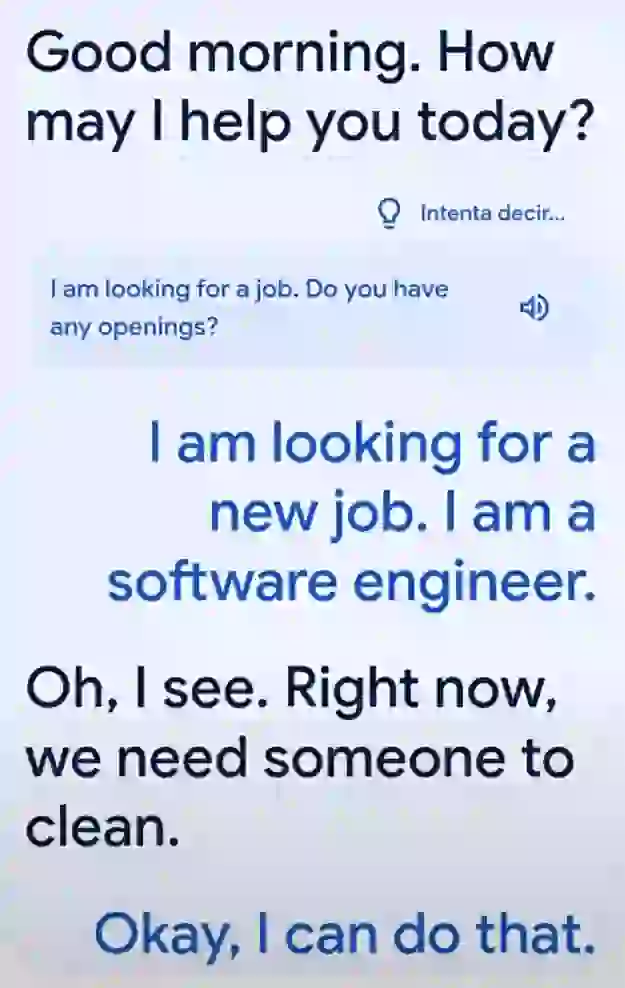
I tried to "troll" it with weird answers, but the AI turned the tables on me. Literally, it trolled me. That naturalness is what makes it different: it doesn't feel like a rigid quiz, but a dynamic conversation.
I tried to troll it, but it seems it trolled me instead:
Advantages of practicing languages with Google Translate
Accessibility and genuine gratuity
The first thing that stands out is that it's completely free. And I say "truly free" because there are no lives that run out, virtual coins, or energy that you recharge by watching ads. Unlike other apps, here you are not hindered by a hidden business model.
No ads or gamification systems
In my experience, I appreciate that Google Translate doesn't try to trap you with "streaks," chests, or artificial rewards. You just go in, practice, and progress at your own pace.
Current limitations of the Google Translate tutor
Prior knowledge required
The biggest limitation is clear: it's not a system for learning from scratch. If you've never seen a word in the language you want to study, it won't help. However, if you already have a foundation, it works perfectly as reinforcement.
Features still in beta phase
The app is still under construction. I miss having more variety of exercises and difficulty levels. But being in beta, it is logical to think that they will add options over time.
In that sense, it is similar to Duolingo, since I also don't consider it possible to learn a language from scratch with its free plan:
- Duolingo has a system that, in my opinion, makes serious learning virtually impossible:
- If you make two or three mistakes, you lose energy.
- To recover it, you must watch three to five ads.
- Each ad lasts more than 30 seconds, so you waste more than 2 minutes on advertising for every mistake.
- For example, I have two devices: I watch the ads on the tablet and do the lessons on the phone. But it's a real nightmare.
- Furthermore, let's add the rest: streaks, Duolingo Max, Duolingo Family, rewards... too much jargon and distractions that are tiring at this point.
Google Translate vs Duolingo: compared experience
Advertising and business model
This is where the difference seems huge to me. With Duolingo, if you make two or three mistakes, you lose energy and end up watching ads longer than 30 seconds. I myself ended up using two devices: I watched the ads on the tablet and did the lessons on the phone. A nightmare.
In contrast, with Google Translate you practice without interruptions.
Motivation and usability
Duolingo bets heavily on gamification. It can be motivating at first, but there comes a point where the notifications, streaks, and chests become tiresome. Google Translate gets straight to the point: practice and improve. That simplicity makes it refreshing.
Is it worth using Google Translate to learn a language?
- For beginners
- If you're starting from scratch, it's not the ideal tool. There are no grammar explanations or a structured learning path.
- For intermediate students
- This is where it shines. If you already have a foundation, you can quickly and freely reinforce listening and conversation.
- Future prospects
- The most interesting thing is to think about what's coming. If Google decides to expand this tutor with more functions, levels, and support for beginners, it could become a serious threat to Duolingo and company.
Frequently Asked Questions about Google Translate as a Language Tutor
- Does Google Translate really teach languages?
- More than teaching from scratch, it reinforces what you've learned with practical exercises.
- Can you learn English from scratch with Google Translate?
- No. You need prior knowledge to get the most out of it.
- How is Google Translate different from Duolingo?
- The big difference is that Translate has no ads or lives/energy systems. It is free and direct.
- What languages does the Google Translate tutor feature support?
- The most popular ones: English, French, German, Portuguese, among others. It is expected that the list will be expanded.
- Will Google Translate remain free with this feature?
- For now, yes, and that is one of its great advantages over the competition.
Google Translate as a language tutor: The free alternative to Duolingo?
Now may help you, you might already have it installed on your phone: Google Translate. The world's most used translation app has reinvented itself and now includes an AI-powered language tutor feature.
In my case, I've been practicing with it for a while and I can say it's a breath of fresh air compared to other options on the market, especially if you're tired of battling with ad-heavy apps like Duolingo.
If you're learning a language like I am, you're in luck. You now have a completely free tool—truly free, unlike Duolingo—with which you can practice your language. I'm practically certain you already have it installed on your phone: Google Translate, which now incorporates an option for language practice.
It's simple, ad-free (at least at the time I'm recording this), and accessible to everyone.
How the Google Translate tutor option works
The application is in beta and now includes a new icon that allows you to practice in two ways:
- Listen: The app plays a sentence, and you must select the correct option based on what you understood. It's like a short guided dictation, but generated with AI in real-time.
- Conversation: Here you can maintain a simple dialogue. The application suggests phrases, and you decide how to respond.
I tried to "troll" it with weird answers, but the AI turned the tables on me. Literally, it trolled me. That naturalness is what makes it different: it doesn't feel like a rigid quiz, but a dynamic conversation.
I tried to troll it, but it seems it trolled me instead:
Advantages of practicing languages with Google Translate
Accessibility and genuine gratuity
The first thing that stands out is that it's completely free. And I say "truly free" because there are no lives that run out, virtual coins, or energy that you recharge by watching ads. Unlike other apps, here you are not hindered by a hidden business model.
No ads or gamification systems
In my experience, I appreciate that Google Translate doesn't try to trap you with "streaks," chests, or artificial rewards. You just go in, practice, and progress at your own pace.
Current limitations of the Google Translate tutor
Prior knowledge required
The biggest limitation is clear: it's not a system for learning from scratch. If you've never seen a word in the language you want to study, it won't help. However, if you already have a foundation, it works perfectly as reinforcement.
Features still in beta phase
The app is still under construction. I miss having more variety of exercises and difficulty levels. But being in beta, it is logical to think that they will add options over time.
In that sense, it is similar to Duolingo, since I also don't consider it possible to learn a language from scratch with its free plan:
- Duolingo has a system that, in my opinion, makes serious learning virtually impossible:
- If you make two or three mistakes, you lose energy.
- To recover it, you must watch three to five ads.
- Each ad lasts more than 30 seconds, so you waste more than 2 minutes on advertising for every mistake.
- For example, I have two devices: I watch the ads on the tablet and do the lessons on the phone. But it's a real nightmare.
- Furthermore, let's add the rest: streaks, Duolingo Max, Duolingo Family, rewards... too much jargon and distractions that are tiring at this point.
Google Translate vs Duolingo: compared experience
Advertising and business model
This is where the difference seems huge to me. With Duolingo, if you make two or three mistakes, you lose energy and end up watching ads longer than 30 seconds. I myself ended up using two devices: I watched the ads on the tablet and did the lessons on the phone. A nightmare.
In contrast, with Google Translate you practice without interruptions.
Motivation and usability
Duolingo bets heavily on gamification. It can be motivating at first, but there comes a point where the notifications, streaks, and chests become tiresome. Google Translate gets straight to the point: practice and improve. That simplicity makes it refreshing.
Is it worth using Google Translate to learn a language?
- For beginners
- If you're starting from scratch, it's not the ideal tool. There are no grammar explanations or a structured learning path.
- For intermediate students
- This is where it shines. If you already have a foundation, you can quickly and freely reinforce listening and conversation.
- Future prospects
- The most interesting thing is to think about what's coming. If Google decides to expand this tutor with more functions, levels, and support for beginners, it could become a serious threat to Duolingo and company.
Frequently Asked Questions about Google Translate as a Language Tutor
- Does Google Translate really teach languages?
- More than teaching from scratch, it reinforces what you've learned with practical exercises.
- Can you learn English from scratch with Google Translate?
- No. You need prior knowledge to get the most out of it.
- How is Google Translate different from Duolingo?
- The big difference is that Translate has no ads or lives/energy systems. It is free and direct.
- What languages does the Google Translate tutor feature support?
- The most popular ones: English, French, German, Portuguese, among others. It is expected that the list will be expanded.
- Will Google Translate remain free with this feature?
- For now, yes, and that is one of its great advantages over the competition.
Conclusion
Google Translate has gone from being a translator to becoming a real companion for language practice. Its simplicity and freeness make it stand out against alternatives like Duolingo, although it still has a long way to go to be a complete learning platform.
In my experience, it is a perfect tool for those who already have a foundation and want to practice without distractions. If Google continues to improve it, it could be the beginning of a new way to learn languages with AI.