
Entrepreneurship has as its basic concept a business idea, which is very different from managing a company since for the entrepreneur the idea is to build something similar to a company; starting from an initial idea and approaching the idea through a project is the foundation of an entrepreneur; it is working consistently using a series of your skills and available resources to fulfill it; in addition to this, it is necessary to have certain virtues such as self-confidence, vision, persistence, taking calculated risks, identifying and seizing opportunities—all of these are key factors when starting a business and are characteristics one must have when undertaking entrepreneurship.
An entrepreneurship is an act of a clearly thought-out and planned idea ready to be realized through clear objectives. Freelancing is not just about learning a skill and getting clients. In countries with inflation, exchange controls, or fragile financial systems, the real challenge is often not working, but getting paid and sustaining oneself.
I know this because I have lived it. Working for international clients from a restricted economy forces you to think differently: about payments, platforms, income protection, and mental health. This guide is not born from theory, but from years of testing, making mistakes, and adjusting the course.
Breaking the mold of talking about software development for a bit, today I come to talk to you about some very interesting and necessary systems to start any digital venture; these tools are very useful if you live in countries with an "uncontrolled exchange rate" like Venezuela, which makes it impossible to obtain any currency other than the national one, let alone a foreign currency account.
Here is a realistic and updated roadmap to building a sustainable freelance career in 2025.

The idea of this post is to present some freelance tools or systems through which we can work and other tools we can use to save the funds obtained and be able to spend them elsewhere on services (hosting), purchases (Amazon, eBay), etc.; in this post, we will see a series of digital-type entrepreneurship tools.
Freelance entrepreneurship as a mindset (not just as a job)
Being a freelancer is not "having odd jobs." It is managing a one-person business in an often hostile environment.
Resilience and adaptation in volatile markets
When you work from countries like Venezuela, Argentina, or others with unstable economies, you quickly learn that:
- Income is not linear.
- The rules change.
- The platforms do too.
In my case, it was often more complex to move the money than to generate the income. That reality forces you to think in layers: where you charge, where you save, where you spend.
Why being a freelancer today is different than 5 years ago
- Before, it was enough to have:
- A platform
- A digital wallet
A technical skill
Today you need:
- Specialization
- Payment strategy
- Smart use of AI
- Minimum personal brand
Real advantages and disadvantages that nobody usually tells you
Real advantages:
- Income in foreign currency
- Control over your time
- Personal scalability
Real disadvantages:
- Irregular payments
- Account blocks
- Loneliness
- Burnout if you don't set limits
Digital Entrepreneurship: E-wallets and Payment Ecosystem
In this section, we will talk about some of the main e-wallets that we can use to withdraw our funds earned through our venture. Our daily work must be saved in a safe place that allows us to buy easily and safely on other sites like eBay or Amazon for electronic equipment or other types to keep enterprising, or in course repositories like Udemy.
PayPal: Send money, pay online, or set up a merchant account
At this point, who hasn't heard of PayPal as an e-wallet, what its benefits are, how it works, where we can buy, etc.

When making a purchase or operation, all transactions must be carried out from the PayPal platform itself and validate the user/password login, which makes it "very difficult" for someone to get hold of our account data; this is something that could happen if we use other solutions like credit or debit cards where we must obligatorily provide card details like card number, security code, pin, and name to a third party if we want to make a purchase online.
PayPal is not a bank; it is rather an e-wallet that allows us to receive/send/spend our funds in currencies like dollars, euros, etc. PayPal charges commissions of around 5% when receiving funds from other accounts, but it is completely free when making purchases on platforms like eBay.
On the Internet, there are many sources that indicate how you can create a PayPal account, so these steps will not be detailed; however, you should keep in mind that there are 3 types of accounts in PayPal:
- Personal Account: For those who buy.
- Premier Account: For those who buy and sell.
- Business Account: For those who sell on the Internet.
You are probably interested in the first option if you only want to use it as a deposit medium and for online purchases, although it is good to keep in mind the other two types of accounts that we will use in another post where we will create a payment gateway with PayPal Sandbox and CodeIgniter.
Once you get your account, don't forget to validate or verify your PayPal account so as not to have any limitations when using the PayPal account.
PayPal is accepted everywhere
Also, if you have an account in dollars, for example in the United States, or in euros, for example in Spain, you can associate it with your PayPal account and transfer funds in a simple, automatic, fast way (it takes one to two business days) and without charging a commission from your PayPal account to the bank account and vice versa.
Payoneer: Receive your payments from global companies and marketplaces
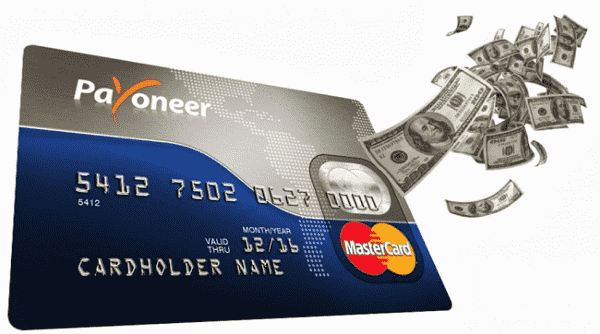
Payoneer, like PayPal, can be an excellent option for our e-wallet; it allows you to create a virtual account in dollars in a bank in the United States which is associated with a physical debit card that arrives in approximately three weeks at the provided address (unless you are in Venezuela where it takes 3 to 5 months and might not arrive, as happened to me lately) completely free! (well, they charge you about $12 when activating the account).
Payment ecosystem for freelancers (the most critical part)
If this article only solved one thing, it should be this: how to collect and protect your money. Therefore, I will not only tell you the good parts, but also the bad parts of the previous platforms:
- From PayPal and Payoneer to the new standard (stablecoins)
- PayPal and Payoneer still exist, but today they represent:
- High commissions
- Risk of blocks
- Constant policy changes
- Payoneer, for example, is now much stricter with sources of funds, and the physical card has maintenance costs that used to go unnoticed.
Even so, I think they are platforms to keep in mind, especially PayPal, since they are used in many places and you must know the good and the bad.
Binance P2P and USDT: the most efficient wallet today
There are other methods we can use to create our e-wallet that are a bit more complicated (depending on the country you are in) such as bank accounts, which in many cases would be the ideal scenario but more difficult to obtain (hence why so many alternative methods like the ones presented here emerged).
Bitcoin: Be your own bank

You have surely heard about the bet on Bitcoins as a digital currency or electronic currency, which are really expensive and cost more than $100,000 at the date of this post.
The main difference with any other currency is that Bitcoin is a decentralized currency.
Bitcoin does not belong to a bank or institution
Bitcoin is decentralized; it does not belong to any entity, government, bank, or institution, which makes it really interesting and complicated to use at the same time.
Why complicated?
Rather, it is different from traditional media that consist of a user and password on some system hosted on a company's servers; Bitcoin takes the idea of an 'e-wallet' to another level, taking them to the following four types:
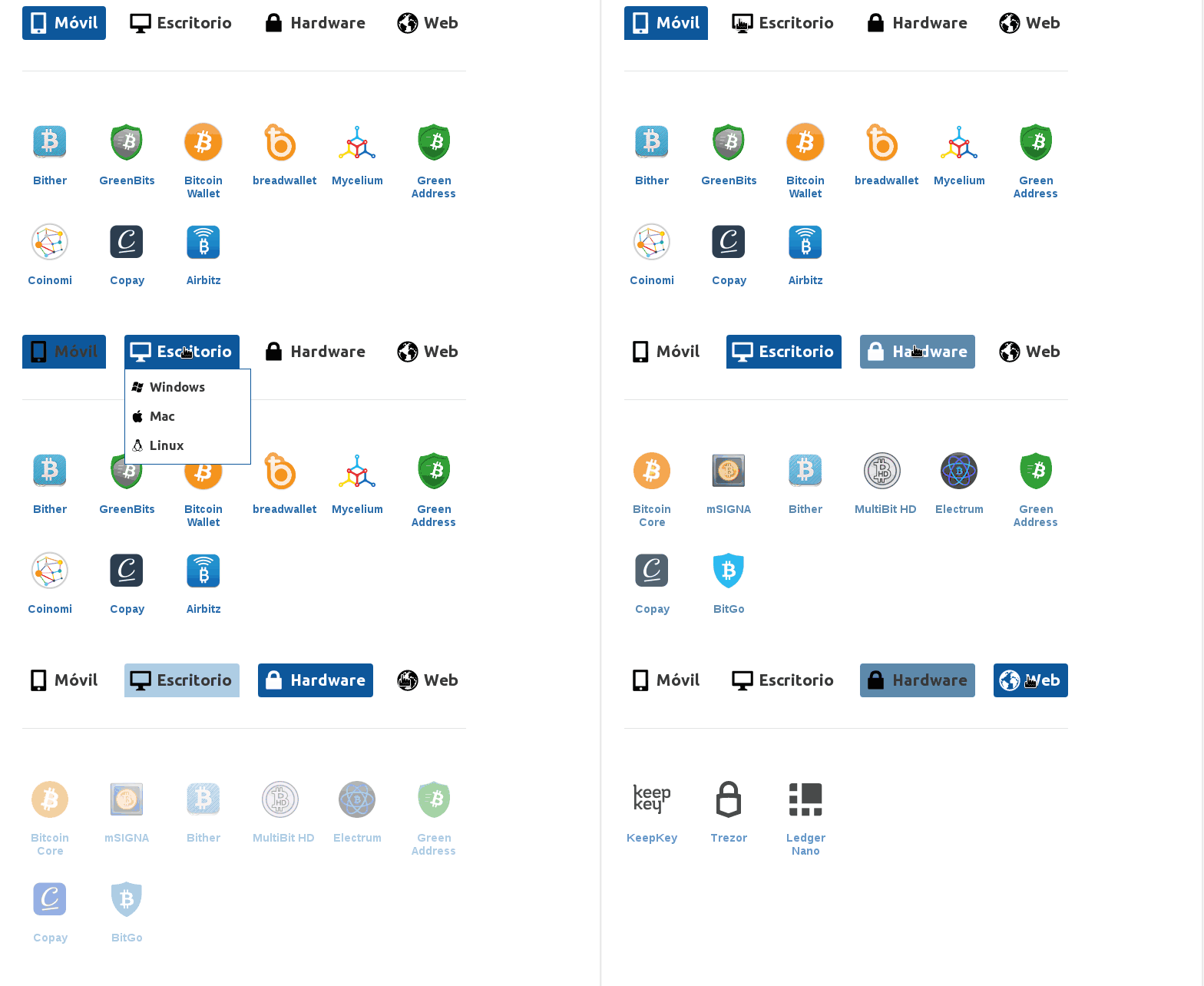
As you can see, there are 4 types of wallets: mobile, desktop, hardware, and web. The idea of all this is to have a true 'virtual wallet' and if it is lost (as happens in real life), you will have no way to recover it and you will lose all the income you have in that account.
To start with Bitcoin, I recommend using a Web system which stores our virtual wallet with our bitcoins, and we only have to worry about our user, password, and protecting our account.
Today, the true standard for freelancers in restricted economies are stablecoins (USDT / USDC).
Binance P2P allows:
- Collecting for work indirectly
- Maintaining value in dollars
- Converting to local currency when you decide
In practice, it has become the most stable and flexible wallet I have used.
Airtm as a bridge between digital dollars and local currency
Airtm plays a key role:
- It connects PayPal, Payoneer, Wise
- Facilitates exit to local currency
- Reduces operational friction
It's not perfect, but it's a necessary bridge.
Wise and Zinli: when they are worth it and when they are not
- Wise: excellent for ACH/SEPA transfers, although with opening restrictions.
- Zinli: ideal as a quick virtual Visa from the mobile.
Both work well as complementary layers, not as a single system.
Risks, blocks, and best practices
- Do not concentrate everything in a single wallet
- Do not move large volumes without understanding limits
- Use stablecoins as a reserve, not as a casino
Where to find freelance work today (what works and what doesn't)

Having our payment methods ready and lined up to receive deposits, it's time to get to work to start generating income; but what freelance work methods exist on the Internet?

There are many online work platforms (every day I find new and interesting online work platforms), although here we will see the ones I have used:
Upwork: the platform with the best clients in 2025
Upwork today is:
- More professional
- More demanding
- Better paying
It's hard to get in, but it's worth it. Here, specialization wins over price.
Freelancer.com: opportunities, hidden costs, and reality

Freelancer is a community with more than 30 million users and more than 14 million published projects; given these figures, you will see that you have many options to choose a project but also a lot of competition.
An important point in Freelancer is that there are projects in Spanish (although there are many more in English), many of them mainly from Argentina, Mexico, Uruguay, and Spain.
Once we register on Freelancer, it will request that you place a payment method which can be a credit card or your already activated PayPal.
As we go a little deeper into the platform, we will see that it works with a kind of plans, all paid except for one:
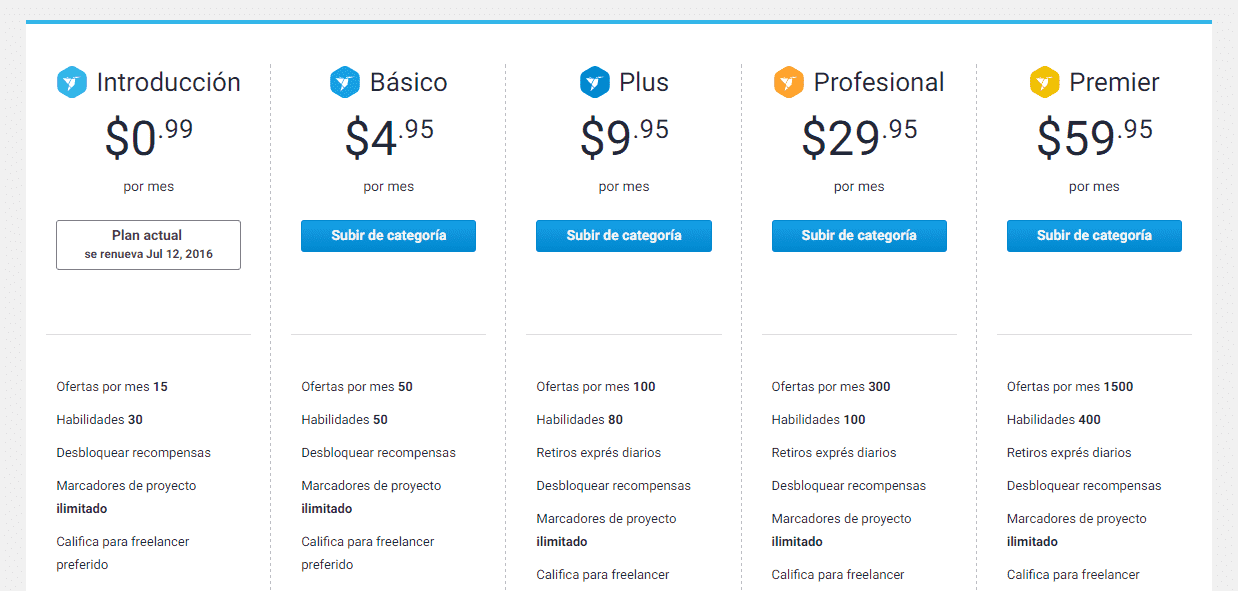
As mentioned at the beginning, there is a lot of competition, so with only 8 bids linked to our free plan for the month, it is far too little; especially when we receive emails as discouraging as these:
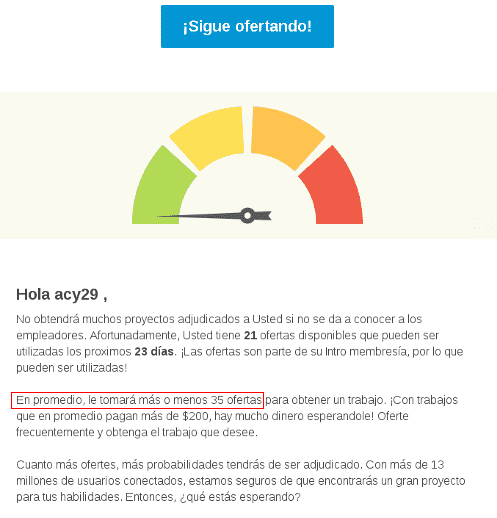
So you must bid a lot and consciously to get some projects; also, the good thing about bidding on an "advanced" or more expensive plan is that our applications will have a better chance of being placed among the top positions regardless of our reputation measured through employer comments and tests performed.
We can choose some projects based on the skills we defined in our profile; to bid on a project, we will see a window similar to this:
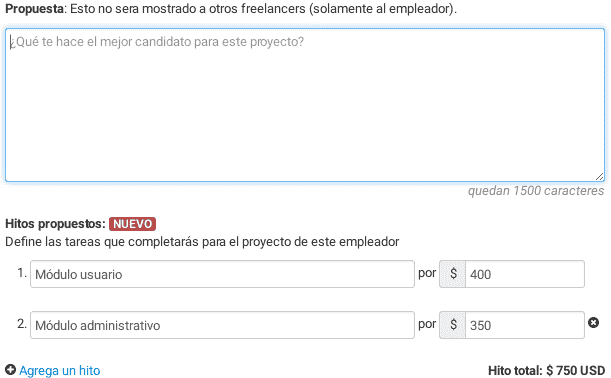
You will see that there are two main fields:
- Proposal: Where you basically add what you are going to do, how you are going to do it, with what technologies, and everything you consider important.
- Milestone: It is like a task; it is important to specify at least one milestone for your project since the larger the project, the more milestones you should create. This way, upon finishing a milestone, you can request its release.
Not everything is rosy with Freelancer
In my opinion, Freelancer is a rather problematic platform in several senses; on this platform, you can find descriptions of full and/or large-scale projects for absurd amounts ($10, $30), which takes away much interest from the platform. It is hard to consider it serious when they cannot handle these matters internally (since they don't pay the slightest attention even when reporting the project).
Freelancer support, besides being bad and delayed (in response time), is completely useless when dealing with abusive clients who are very difficult to detect when accepting work. Freelancer gives all the advantages to the clients and none to the freelancers, and systems like disputes are practically a waste of money and time; in short, the Freelancer has no support on this platform.
As if the above weren't enough, Freelancer updated its commission charging system to make it more efficient! (for them, of course!). When you accept the award of a job, they charge you the entire fee, which corresponds to 10 percent of the project (they also charge the employer 10% of the total cost, but that's when the employer makes a deposit). So in practice, for a freelancer, besides having to bid a lot (and avoiding clicking the giant blue button that always appears when bidding to promote your offer—which is useless—and for which they charge you again...), to get a project for a client whose intentions we don't know, Freelancer charges the full project commission without the freelancer having earned anything and without even the existence of the security deposit that the employer must make and which, of course, is optional for the client.
And the worst to date is their "conversion rate," which is also very "efficient," just like the commission charging:

As you can see in the image, for Freelancer and its supposed 1000 banks referenced by the "efficient" support gentlemen, they indicate that for them the euro is worth practically the same as the dollar—that is, one dollar is equal to one euro. So after working for several days on a project that, in practice, we paid upfront to start working... and praying that the client is not a cheater and that we don't lose funds sponsoring bids, we finally gather income only to want to withdraw it, and if by bad luck we perform the conversion (or they perform it almost automatically), we can keep losing money, which is great for Freelancer. The worst part is that one euro equals one dollar according to Freelancer, but the other way around (one dollar to one euro), according to Freelancer's mathematics and its "1000 banks," the dollar is worth approximately 0.8 euros. So yes, another way to take our income, to say the least.
Even after explaining all this, Freelancer is a good option for finding serious clients who actually want to work, but as on all platforms, you have to look for them with a magnifying glass and be very concise when discussing project details.
Apparently, all this has caused the platform to get somewhat stuck; there are no longer as many project posts as before, nor interested Freelancers. It is a somewhat expensive platform due to what was mentioned before, and it seems many people have lost interest; fewer projects and fewer interested freelancers who aren't of Asian origin, who seem to be the ones using the platform the most now. However, this is also an opportunity because although there are fewer projects now, there is also less competition, something you can take to your advantage.
In summary, when I worked on Freelancer, I learned the hard way that:
- Aggressive commissions
- Unfavorable conversion
- Unhelpful support
Still, there are serious clients, but you have to know how to filter and protect yourself.
Working with Freelancer, my recommended way
One aspect you can take to your advantage to avoid the aggressive charges of the platform—which in practice charges you for working (upfront charging even before the client deposits, just by accepting the project)—is to have the client create a project for 20% or 25% of the total value of the project on the platform and handle the rest through any of the e-wallets we saw earlier. This way, when you develop that percentage of the project, you ask the client to release the reflected value and for the work done to be paid in an e-wallet and not on the platform; when you finish the job, the client releases the project funds on Freelancer and they rate you. This way, both your client and you manage to lower project costs by not having to pay so many commissions, and you have your funds automatically in your wallets.
In this way, you also manage to expose your profile and income less, which Freelancer makes public and with total transparency—something that may not be entirely beneficial for you.
Fiverr and packaged services
Here you don't chase clients: they buy your services.
It works very well if:
- You know how to package
- You are specific
- You optimize your offer
These are two platforms very similar in operation and offer a different approach than the previous freelancer media; the idea is that we post our services and employers or clients look for us, see our services, and contact us. You can add "extras" to build a more complete service where the client can customize the service to buy and thus obtain a higher income:
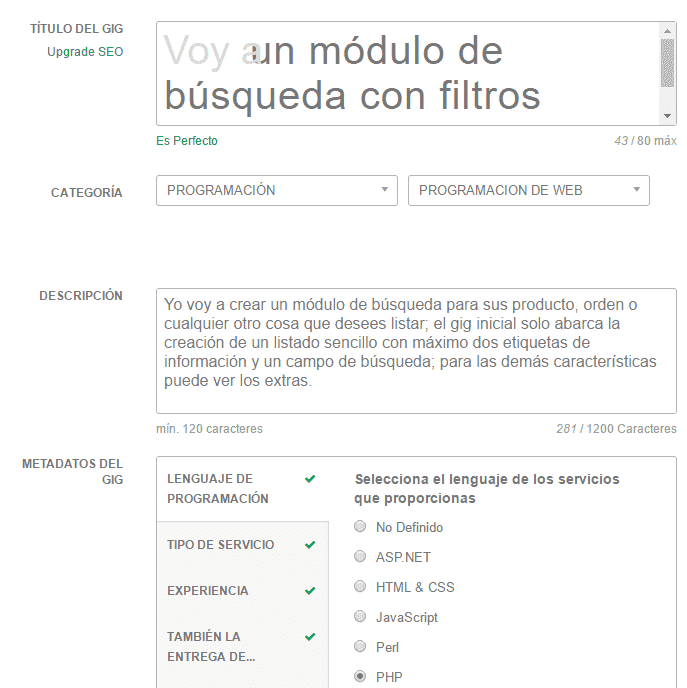
The interesting thing about both platforms is that apart from setting up our services, there is little else we have to do—simply wait for clients to call us and be mindful of updating our services to keep them current with our work. It's an interesting way to undertake a venture.
LinkedIn as a channel to get direct clients
Today LinkedIn is a goldmine:
- Direct contact
- No commissions
- Higher quality clients
The modern freelancer does not depend solely on platforms.
The end of the price war
Competing on price is a trap.
Specializing is the way out.
Workana
Workana happens to be the freelancer solution for Latin Americans; it works very similarly to the previous two with a description and milestone system and has a significant number of projects published daily:
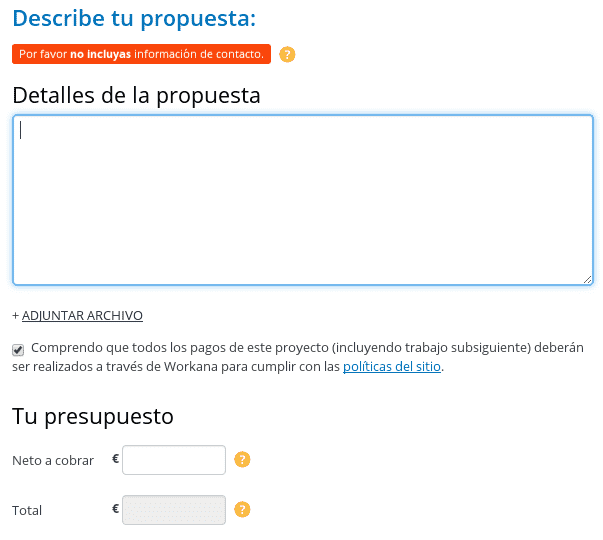
Practically all the posted projects are in Spanish; truthfully, for me it has not been a very remunerative platform as Freelancer has been despite all the inconveniences it presents. Workana also features very poorly described, confusing, and/or complex projects with absurd budgets where a large number ask for complete systems where the client estimates paying less than 40 euros. I also understand that the support system is terrible, makes many mistakes, and primarily benefits the client. I don't know how well they are doing today, as we can see projects with very few bids, suggesting that many freelancers have lost interest in the platform.
Workana is a platform you have to be very careful with. I recently heard of a case where someone's email for receiving PayPal payments was changed to another identical one except for one letter. Thus, when sending funds from Workana to PayPal, they arrived at the other account. The problem the platform has, besides what was exposed, is that when you change (or someone changes) such sensitive data in the user profile—like the email configured in PayPal or user data—or request a release of funds, the platform's security system is non-existent. It doesn't send emails, text messages, or anything of the sort. So if you decide to work here, you must take extreme care when moving your funds, verify all data, and take the corresponding screenshots.
SoyFreelancer: An army of freelancers available at all times!
With a most peculiar slogan where we hope the client doesn't take it too seriously and show up on a Sunday night..., it is a platform I recently discovered that, like Workana, is oriented towards Spanish-speaking users and that I am still testing. Like all systems seen previously, it has a system of Premium, basic, and free accounts with different benefits for each. Additionally, the payment methodology is through an escrow system or security deposit, which consists of the platform holding the funds until the project is concluded or until one of the parties defaults.
The web has an integrated chat system like the other solutions (which sometimes falls a bit short when talking about moderately complex projects). It has a complete management of the freelancer's training and experience where it allows loading basic data, skills, photos, project portfolios, and even the CV itself.
It has quite an interesting bidding system, and we would have to measure how effective it is, where you can send a question to the employer or bid right away:
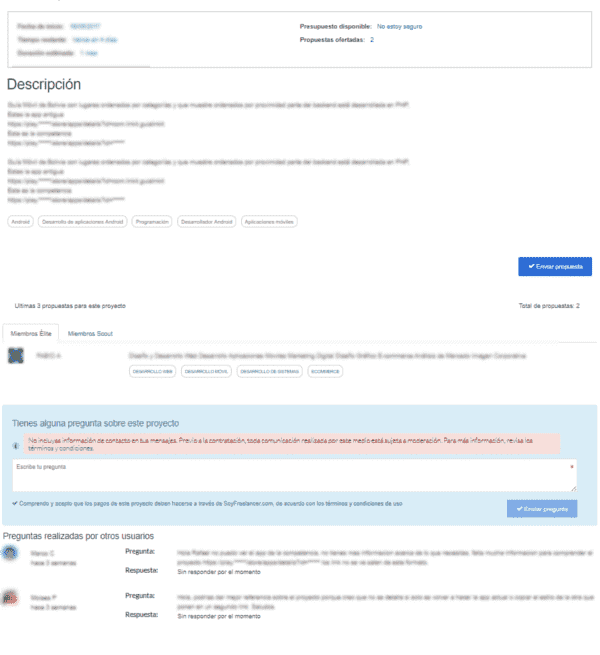
In the previous example, we see that the previous project has barely received two proposals (with more than 3 weeks of being live), where the project has up to a month of life and a couple of questions where the client has not responded. Of course, some have more offers from interested freelancers, but not too many, and this is probably why project lifespans are quite prolonged.
It is a site that doesn't have a very impressive portfolio of projects nor many freelancers, but let's hope it grows over time (and that it's not bought by other systems...).
How to get freelance clients without depending on platforms
Minimum Viable Personal Brand
You don't need to be an influencer.
You need:
- A clear profile
- A concrete message
- A well-defined problem
Effective proposals (and how to use AI)
I use AI to:
- Write clearer proposals
- Adjust tone in English
- Save time without losing quality
It doesn't replace your judgment; it amplifies it.
Validating clients and avoiding problems
- Deposits, always
- Clear scope
- Nothing "just to try"
I learned that saying "no" is also growing.
Artificial Intelligence applied to freelance work
AI for proposals and deliverables
ChatGPT, Claude, or similar help to:
- Proposals
- Documentation
- Ideation
- Corrections
AI as a competitive advantage
It's not cheating.
It's leverage.
The freelancer who ignores AI competes at a disadvantage.
Now you know which platforms you can work with and how to collect for your services in e-wallets. The next thing you must take into account is knowing how to undertake a venture; for that, here are the following tips which are oriented towards digital development, as we will see below:
- Know your market and dominate it. For everything you want to do in life, it is necessary that you know what you want to do. In this case, if you are going to offer a service, for example system programming, you must know several programming languages, you must know how to structure a system, create relationships in databases, how to perform programming so that it is scalable, etc.; but for everything, you must know what you can offer and in